Role Insights AI
Pivoting a platform overhaul into a commercially viable MVP.
Project summary
- Stepped up when an expensive platform rebuild lost stakeholder support and the head of design was unavailable
- Had 2 weeks to pitch a pivot, prioritising features by effort and impact, and turned the process into a company playbook
- Translated 12 user interviews into a jobs-to-be-done hierarchy map that defined the need
- Turned 1.3M CVs into credible career insight, launching 120 deep profiles over 200 patchy ones
- Shipped a commercially viable MVP, securing $300,000+ in revenue from enterprise clients
A complete site rebuild was underway
Madgex is a white-label platform that helps 6.2m registered jobseekers looking for the next step in their career.
We were working on a v2 platform that focused on career guidance and recommendations over search results. This was built from scratch, to provide an experience that made better use of our available tech.
Stakeholder priorities changed
This expensive project had been running too long, the revenue model proved too disruptive and the finish line was not in sight.
Business stakeholders needed to see a commercially viable feature release to justify the continuation of the project, and they needed to see it soon.
Unfortunately, the head of design and product was unavailable so responsibility fell to me.
A major pivot to a commercially viable MVP
I had 2 weeks to prepare a pitch for the director, whilst managing the tasks for a UI designer and a junior UX designer.
Swipe
I identified a feature I had been working on, known as AI role insights, as having the strongest impact to effort ratio. It could fit nicely into our existing platform without disrupting any of our primary user flows and revenue streams.
At very short notice and under a lot of time pressure, Max did an amazing job redesigning the UX flows of the Career Path project, giving us options to make them more commercially impactful.
AI Role insights
AI Role insights translates the data from over 1.3 million CVs into valuable insight on roles within their industry, including the typical requirements and expectations. It presents those insights to registered users on our sites.
The end-product had three parts:
Role Explorer
A Lister page for jobseekers to browse and discover 200+ professional roles by industry and career stage.
Role profiles
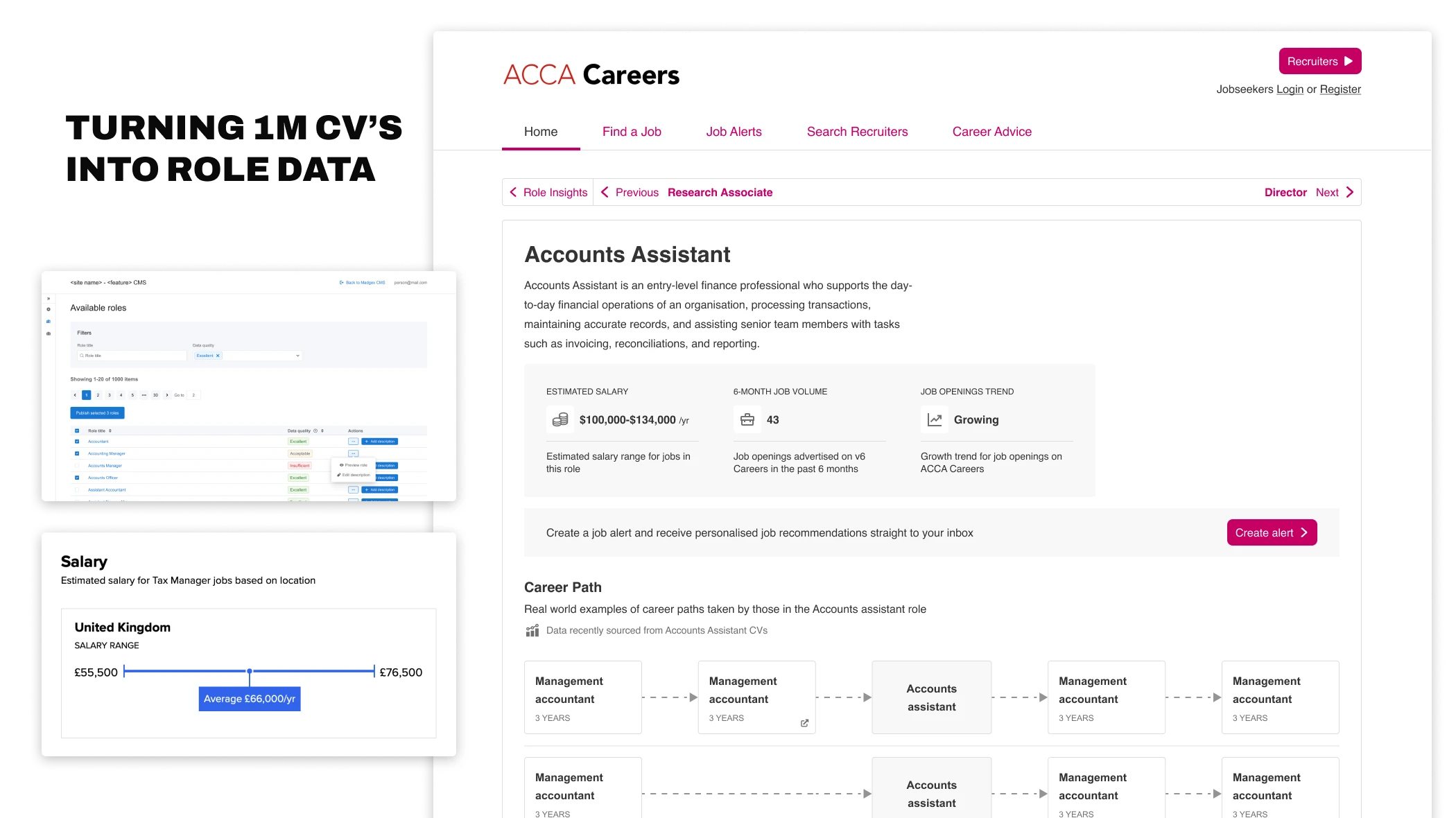
Individual pages showcasing a decade of gathered CV data around a specific industry role:
- Career paths
- Qualifications
- Salary expectations
- Hiring trends
Management dashboard
CMS for site owners to assess data quality scores and publish role profiles to their boards.
12 user interviews defined the need
The findings were translated into a jobs-to-be-done framework, and visualised in a JTBD hierarchy map.
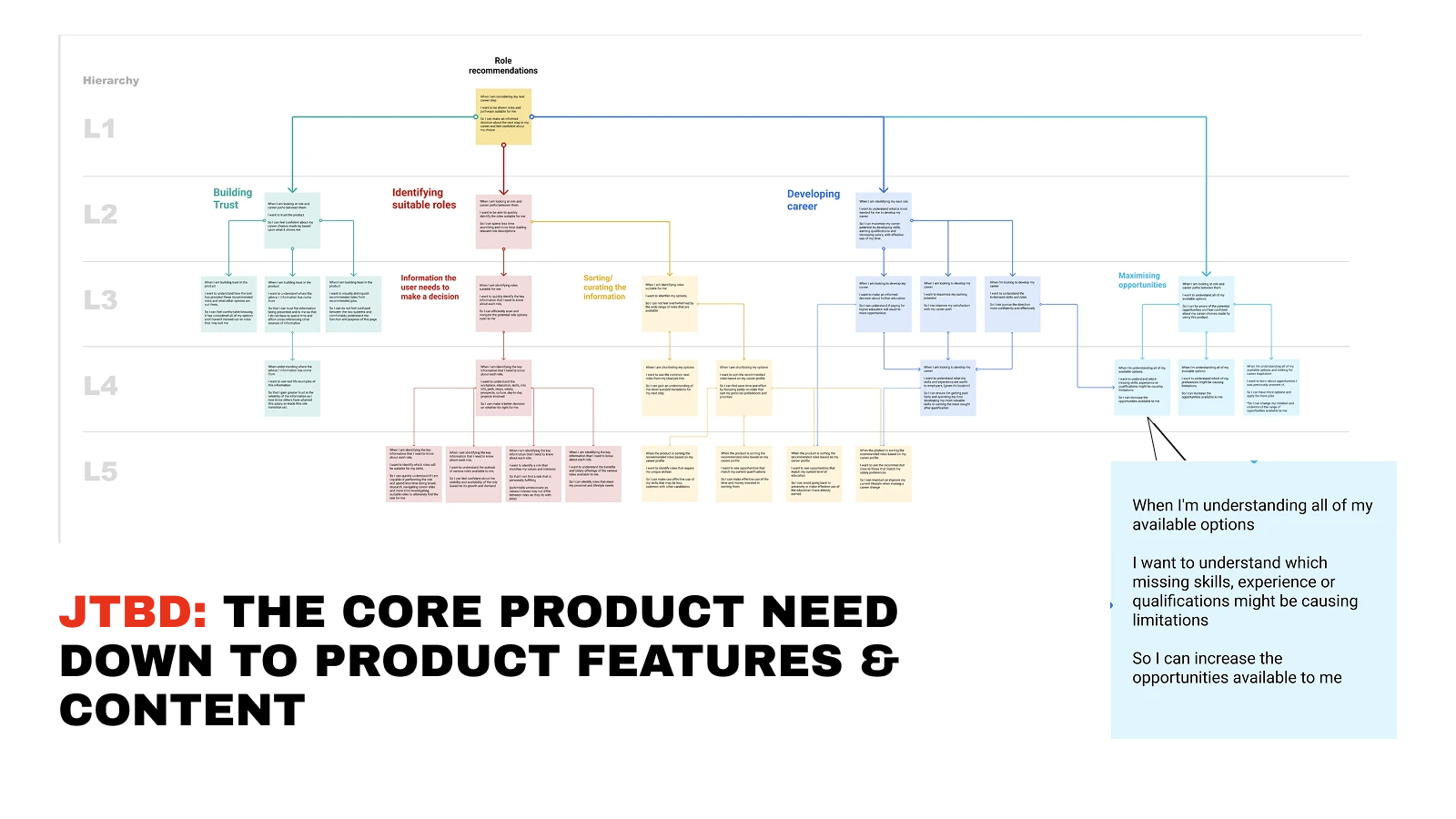
JTBD hierarchy map
Users needed guidance on how to grow
Many users had specific role titles in mind as a goal, but they didn't know how to reach it. What education, skills, or qualifications would they need to get there? The career platform could offer that growth.
Jobseekers needed support identifying opportunities
They understood their own skills, but not how they could be applied to other roles and opportunities in the industry, restricting their potential job search.
Career paths are invisible
Due to the non-linear nature of academic roles, 5 of 12 participants couldn't name roles one level above their current position. Job boards only show what you search for, creating a discovery gap.
Trust requires data transparency
8 out of 12 users were sceptical over the idea of dynamically generated content. Particularly in academic fields, transparency around the source of the data would be very important for trust.
Translating 1.3M CVs into insights for career guidance
- Run workshops with data engineers to uncover what’s possible with our data
- Assess processes and tools to guarantee data quality
- Collaborate to create data visualisations that are credible, valuable and accessible
- User test, user test, user test. 85% agreed they found the data credible or very credible
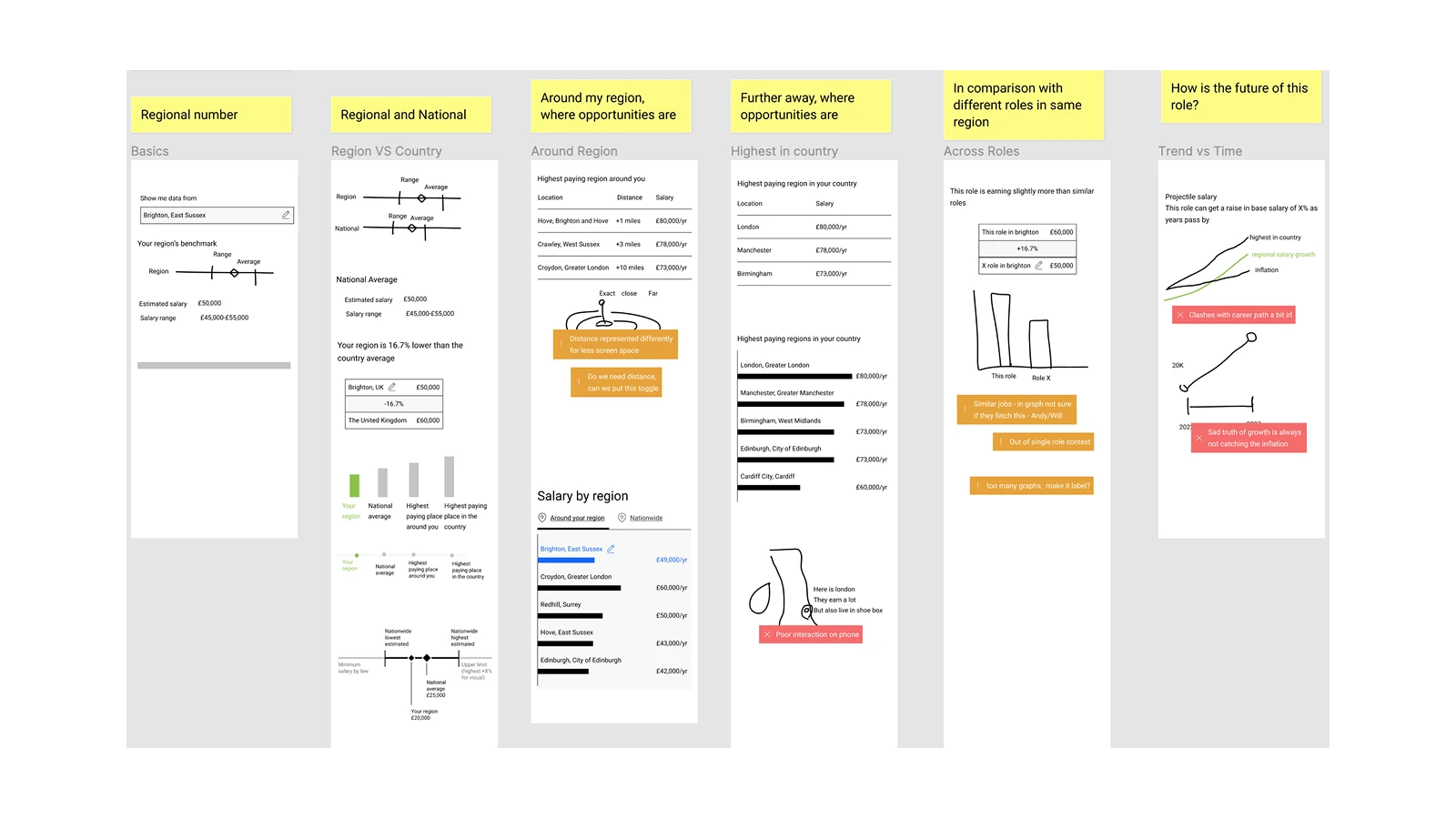
Data visualisation workshop
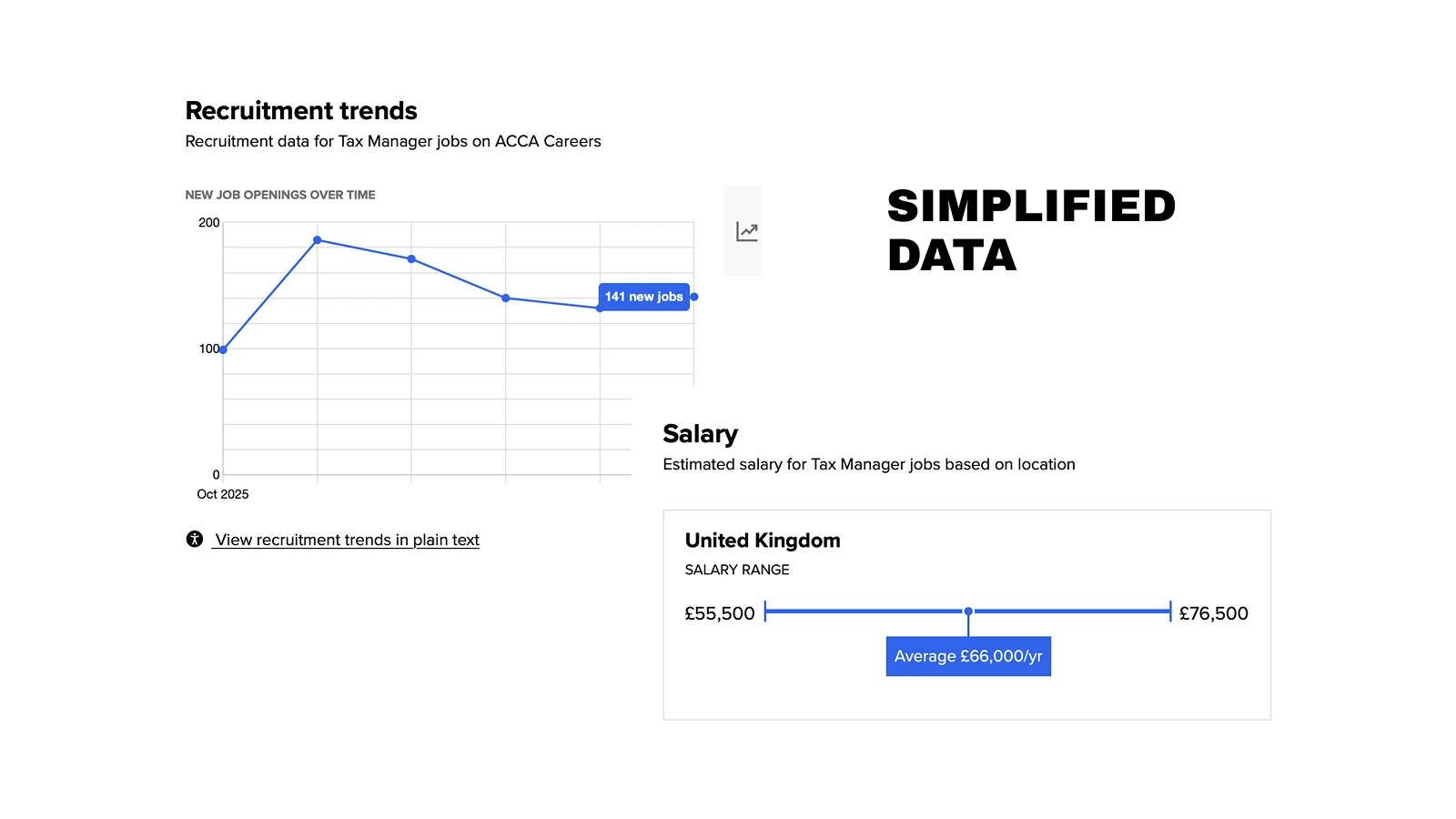
Final designs
MVP doesn’t mean minimum quality
We launched 120 high-quality profiles instead of 200 patchy ones. Better to ship deep, trustworthy profiles than broad but incomplete coverage. Roles below threshold asked users to “Check back soon” with an option for email alerts.
Principles that scaled across the product
White-label design system
Built around 8 brand tokens. Layout and typography fixed, colour palette variable. 12 trial clients launched in 6 months with no custom design per client.
Encourage exploration
Highly scannable content. Help users recognise scale and depth of data available. Iterative testing to get users finding key info from 45+ seconds to 12 seconds.
Honesty about data confidence
Tools that let clients selectively publish content based on confidence scores. Disclaimers and sources to let jobseekers plan their career with utmost confidence.
Accessibility at the forefront
In particular, ensure that all graphical visualisations have screen reader alternatives to convey the same value of information.
UX approach to writing
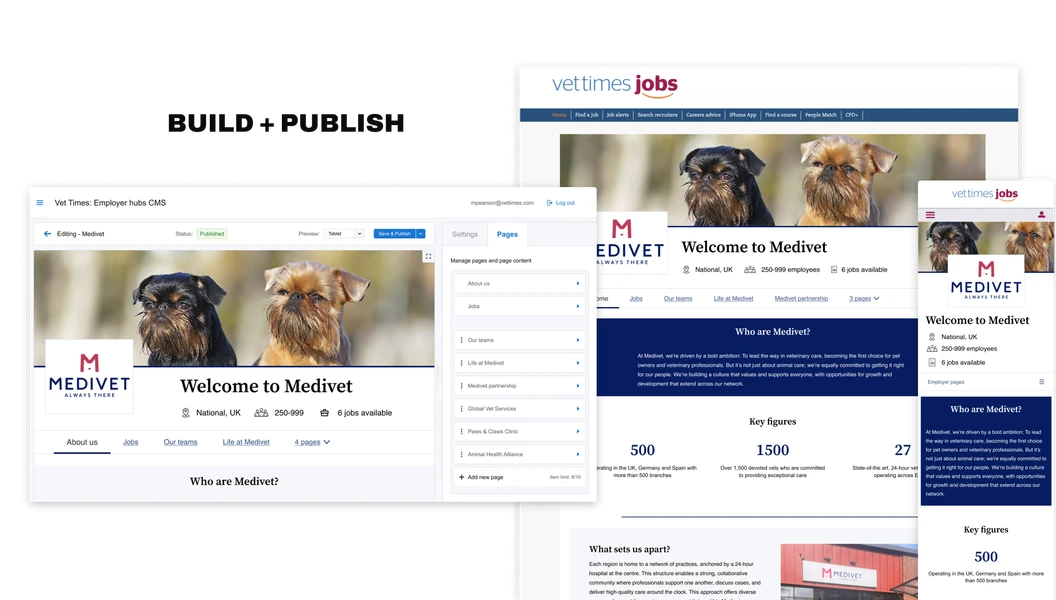
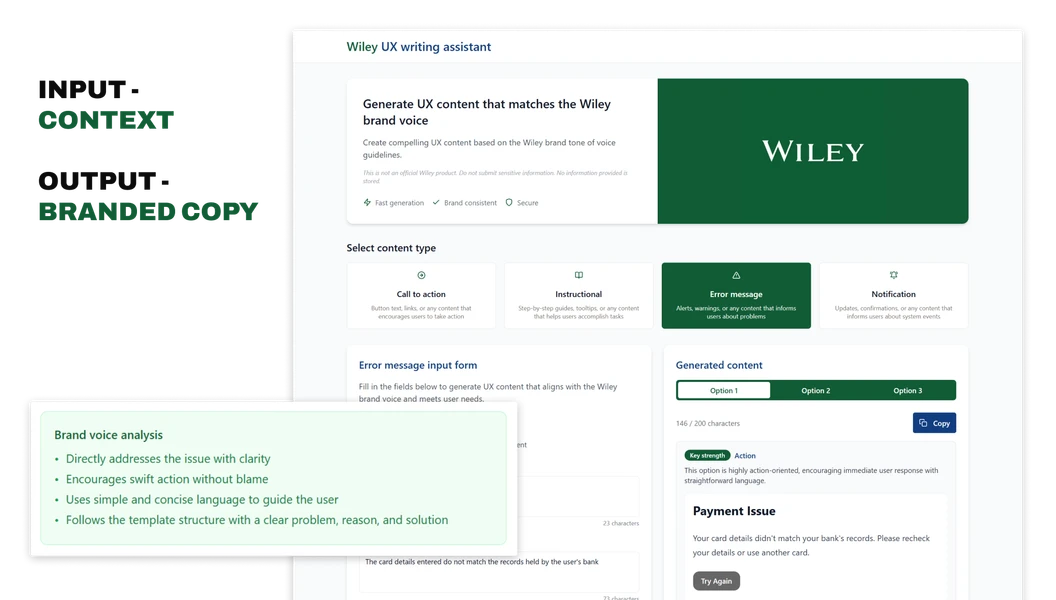
Structured writing across the product. Informative descriptions, error messaging that never blames the user, always offers an action. Connected to a practice I presented at UX Camp Brighton.

Brand tokens

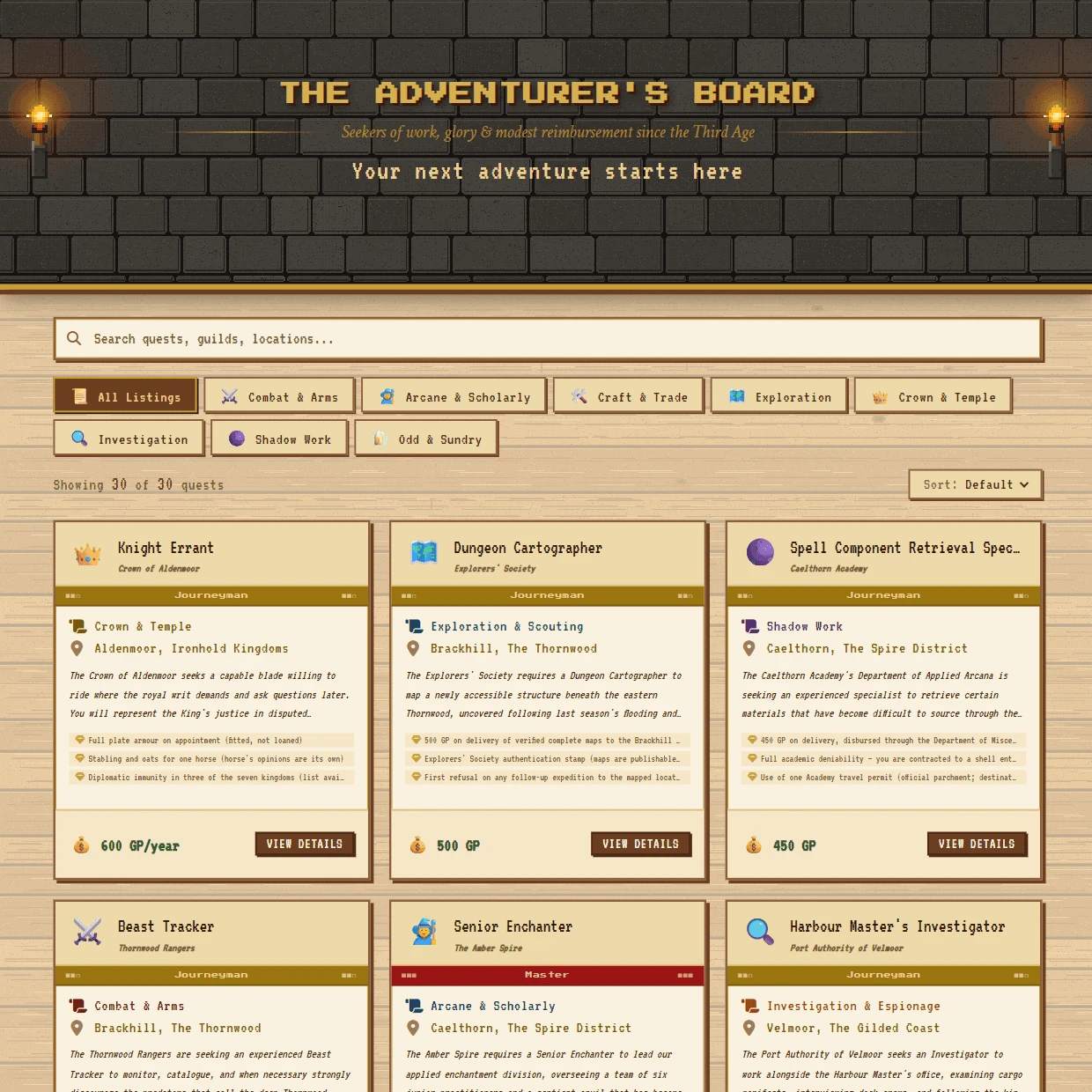
Lister redesign

Accessibility

UX writing
Role profiles for jobseekers, supported by a data CMS
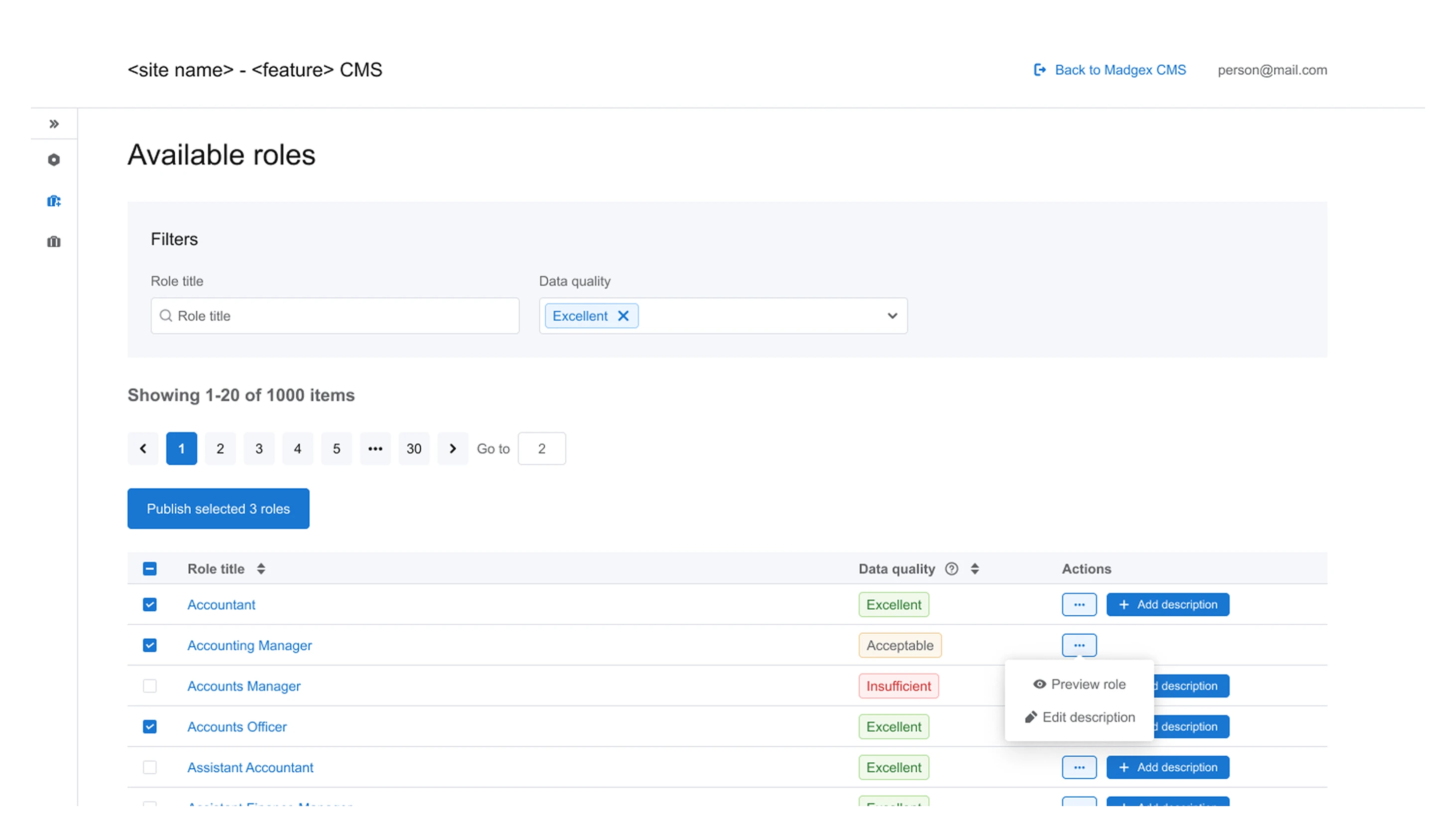 Manage available roles
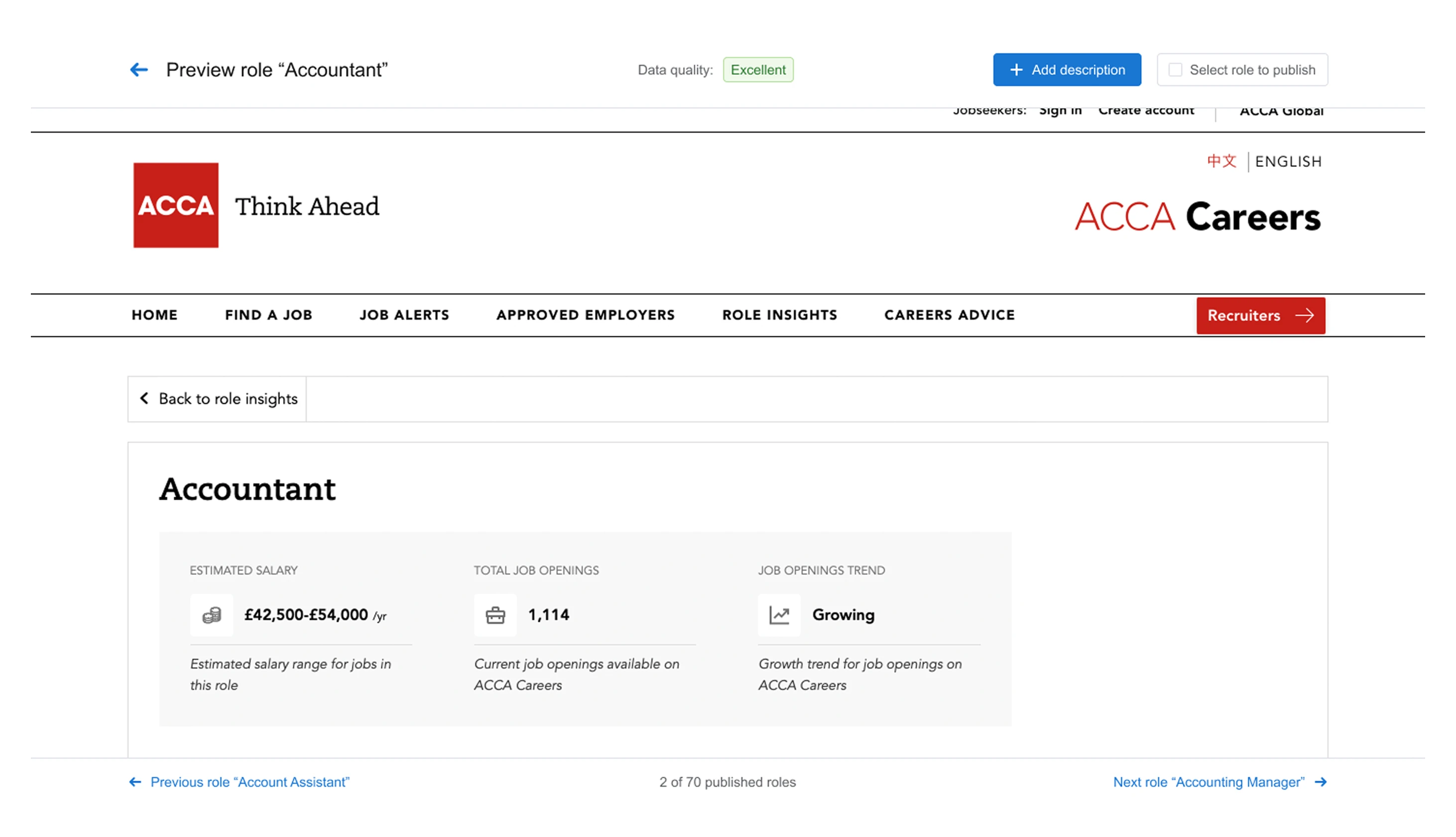 Review quality and select for publishing
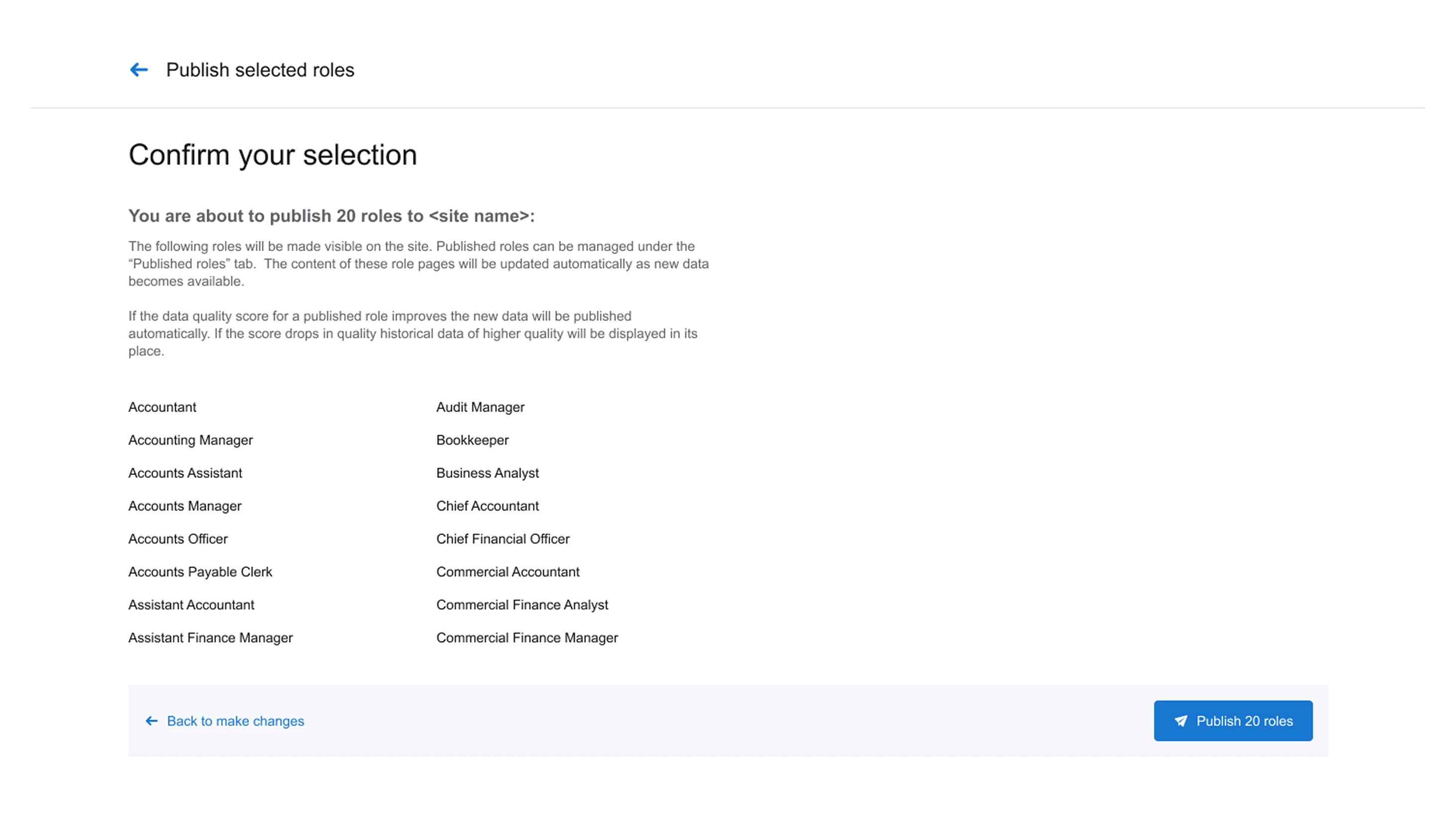 Publish in bulk
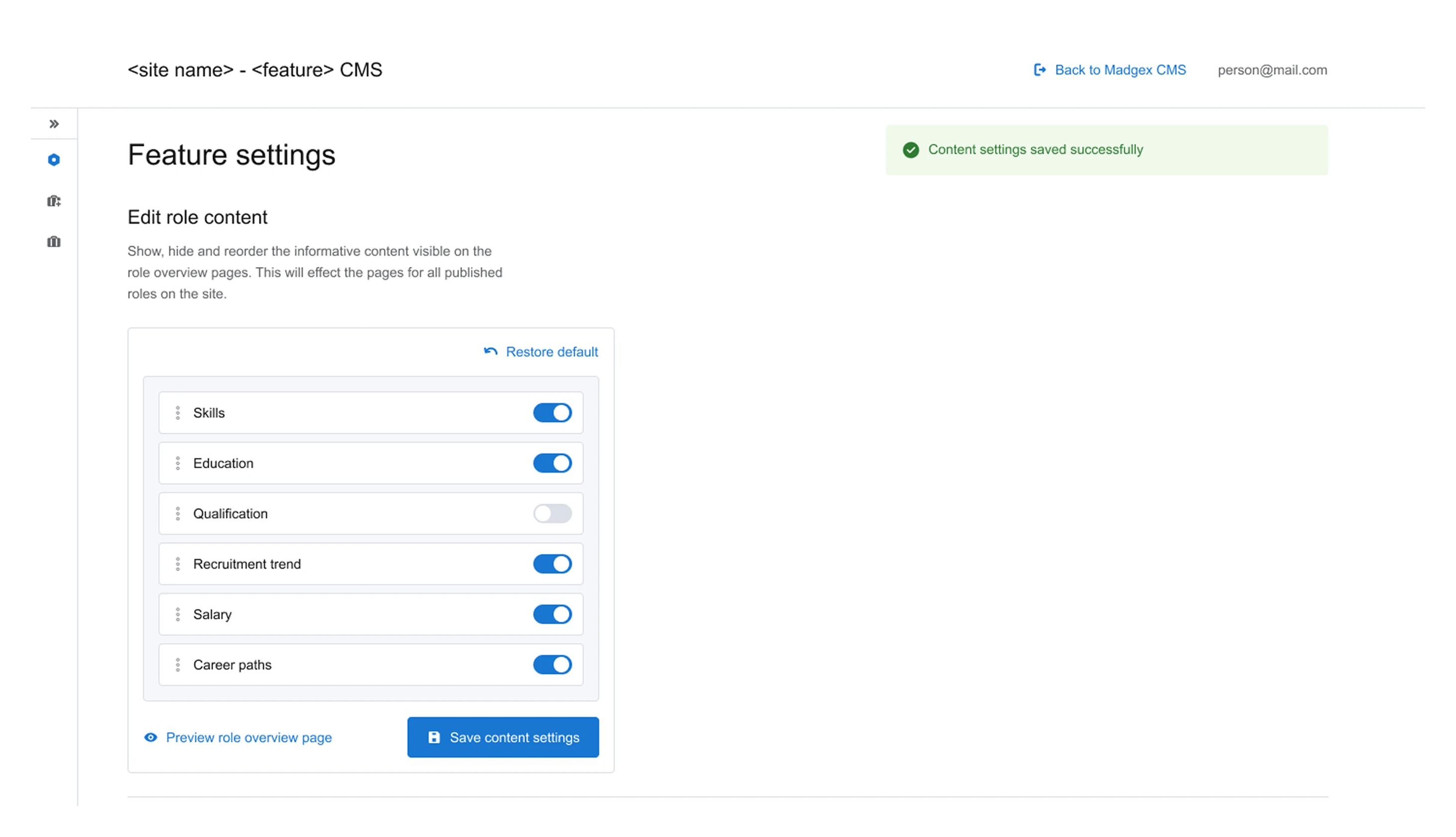
 Edit profile sections
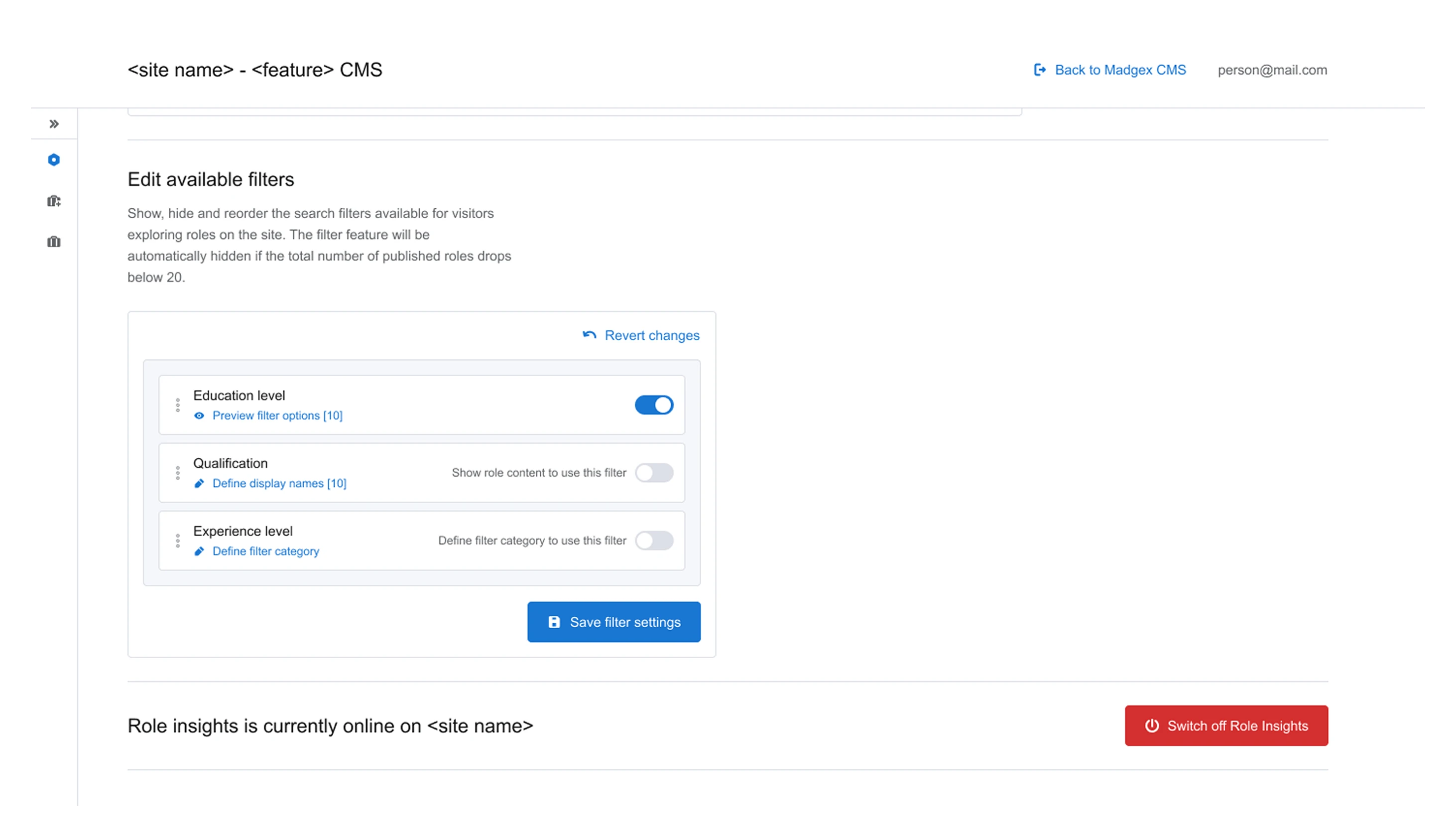
 Customise filters
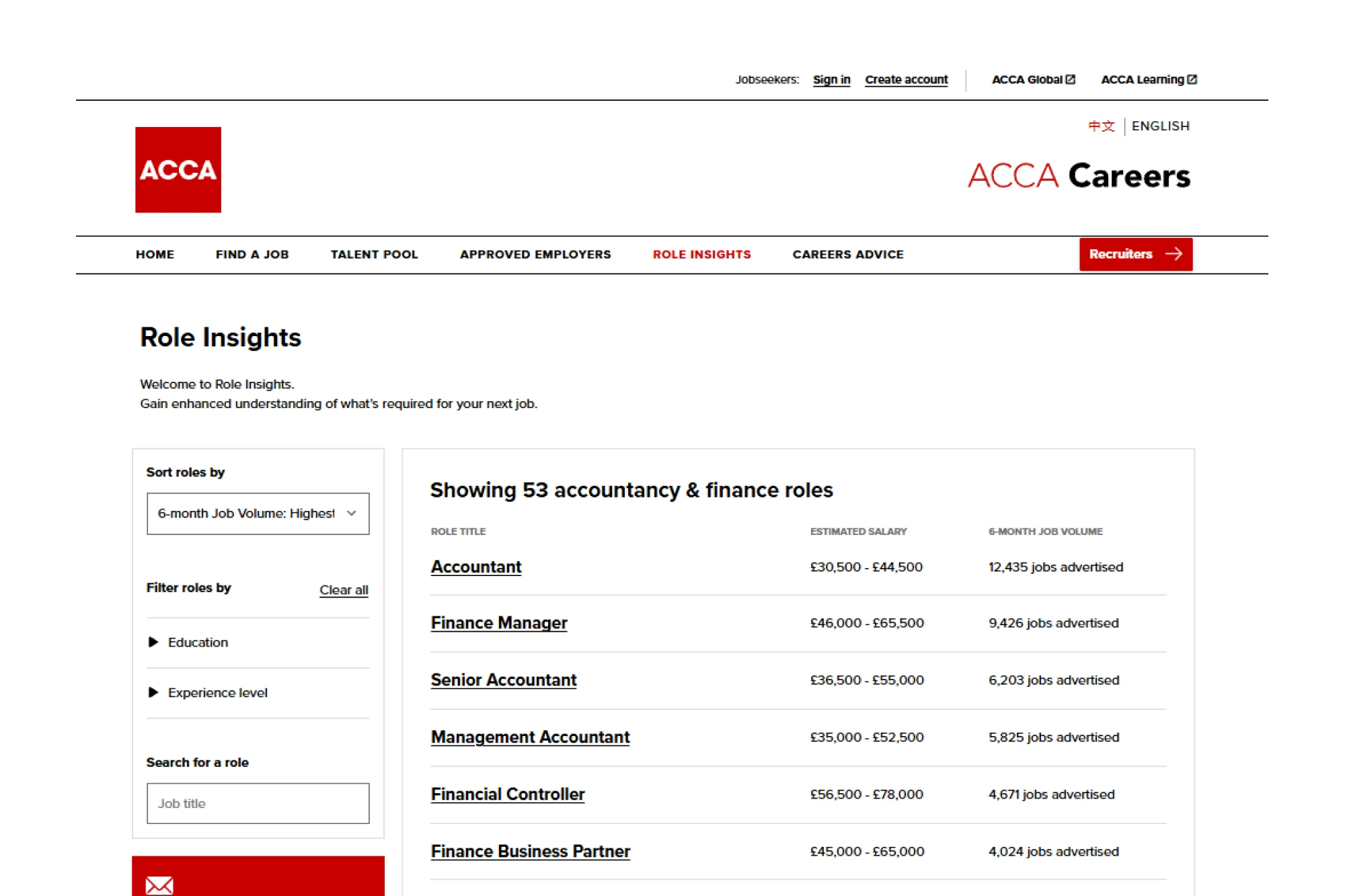 Role Explorer
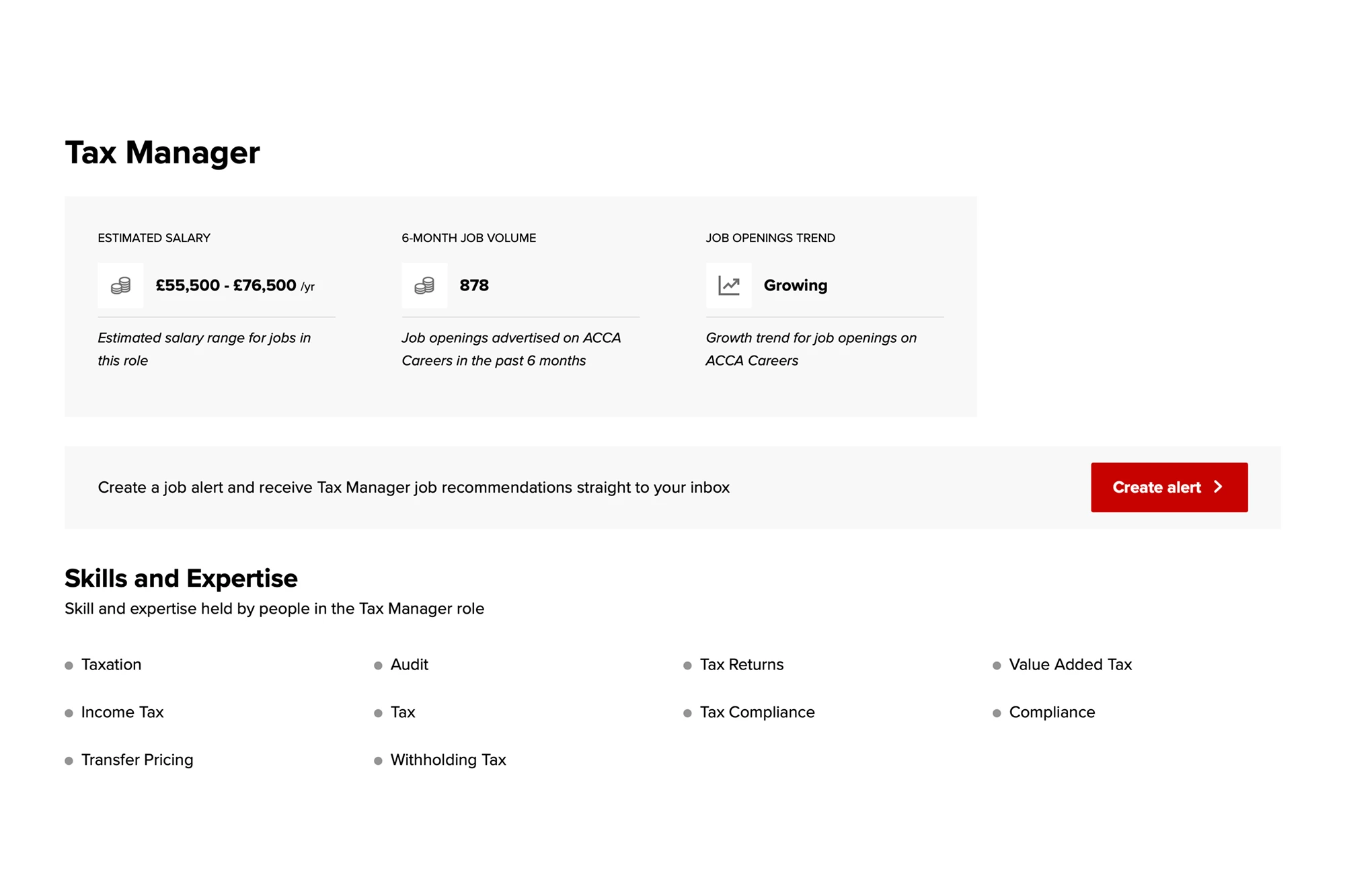 Role profile overview
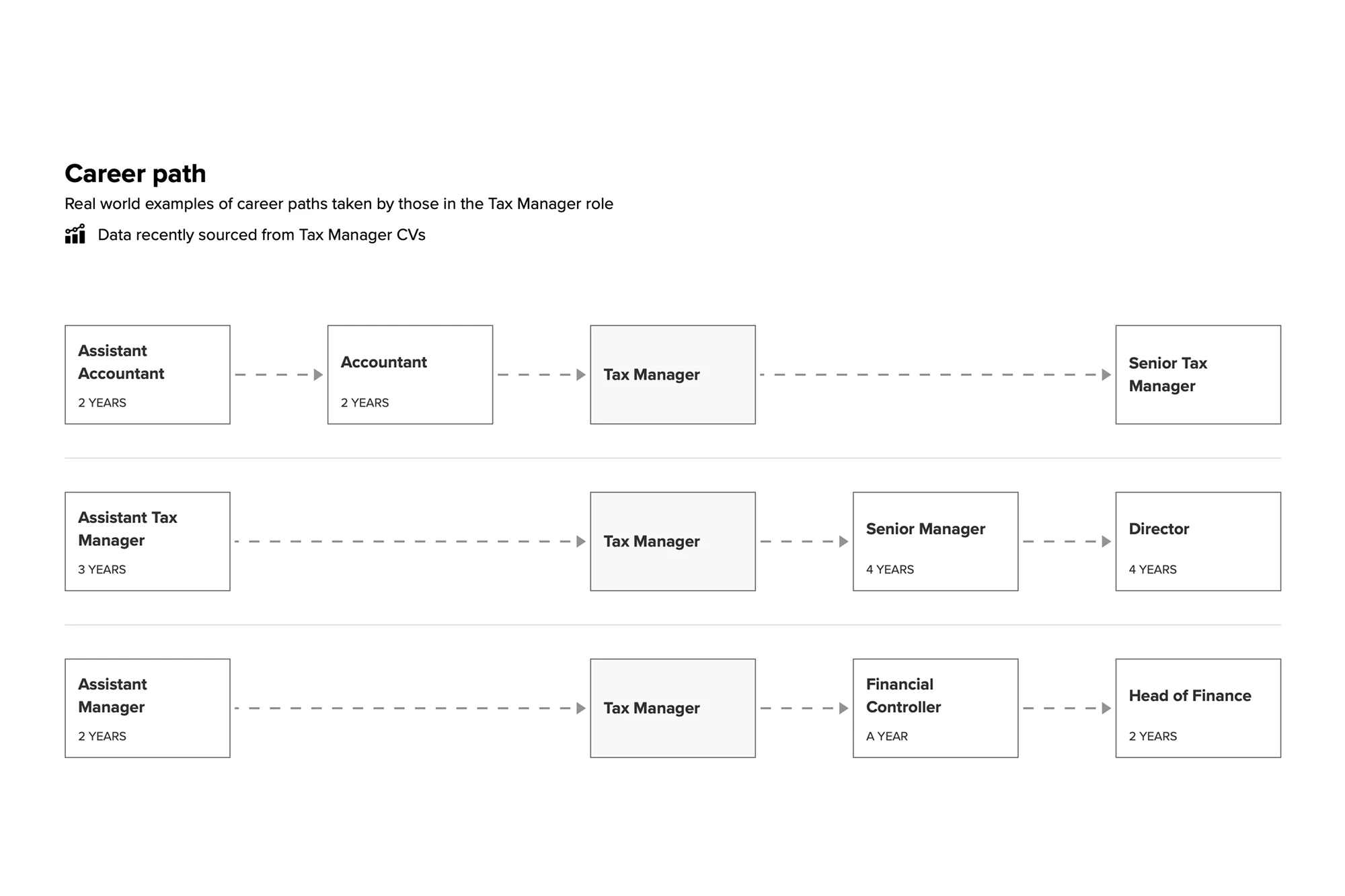 Career paths
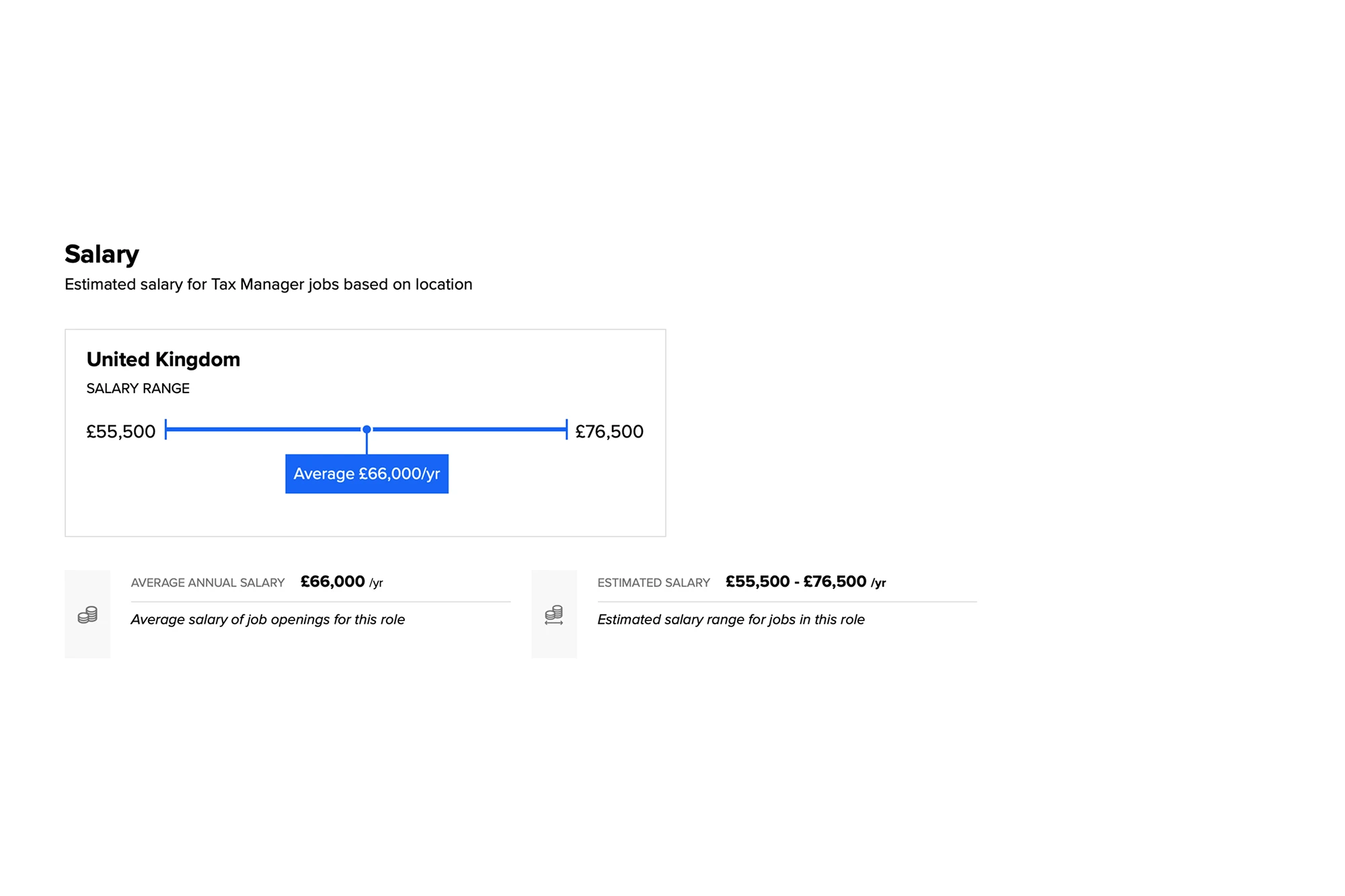 Salary
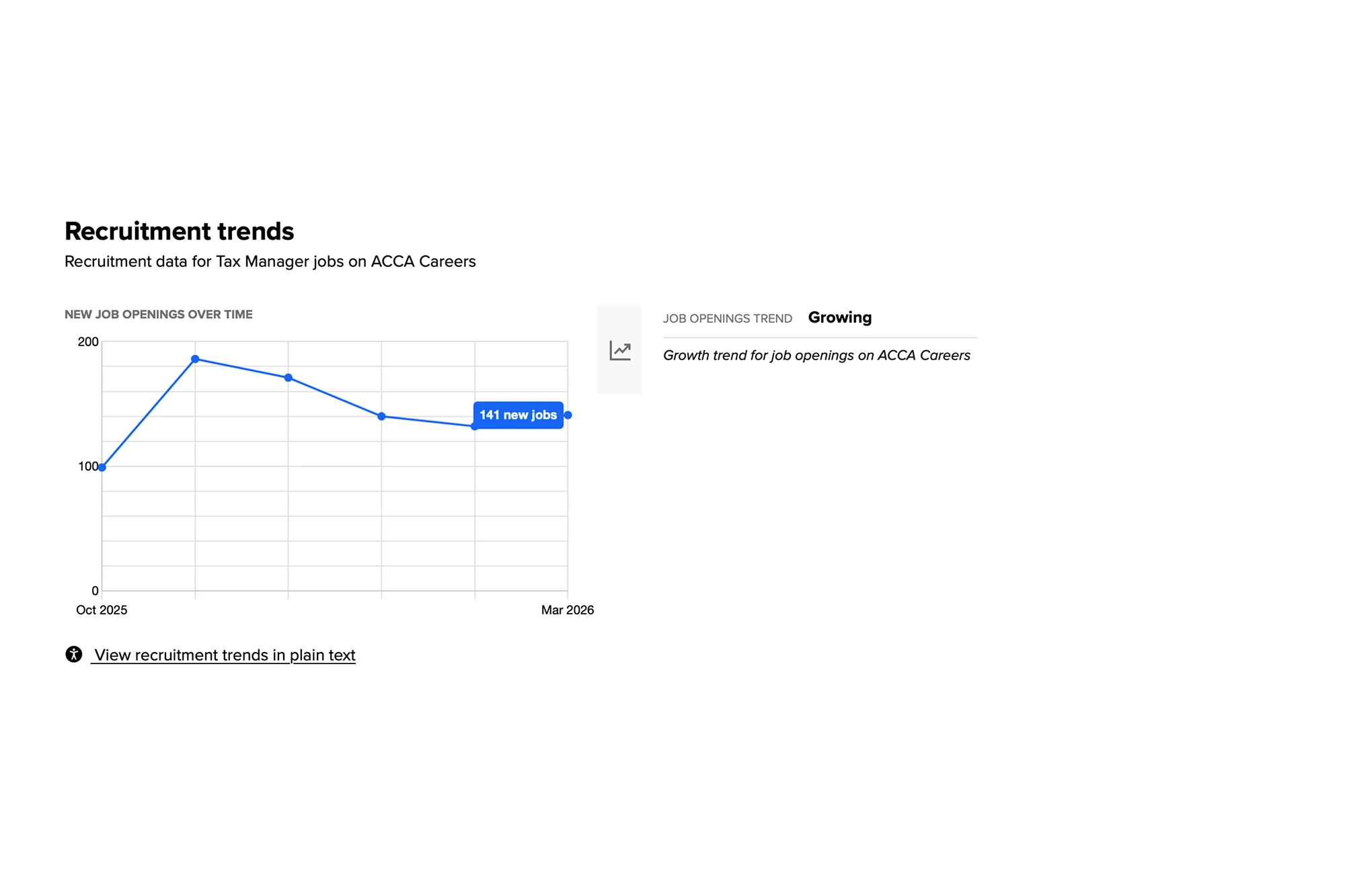 Recruitment trends
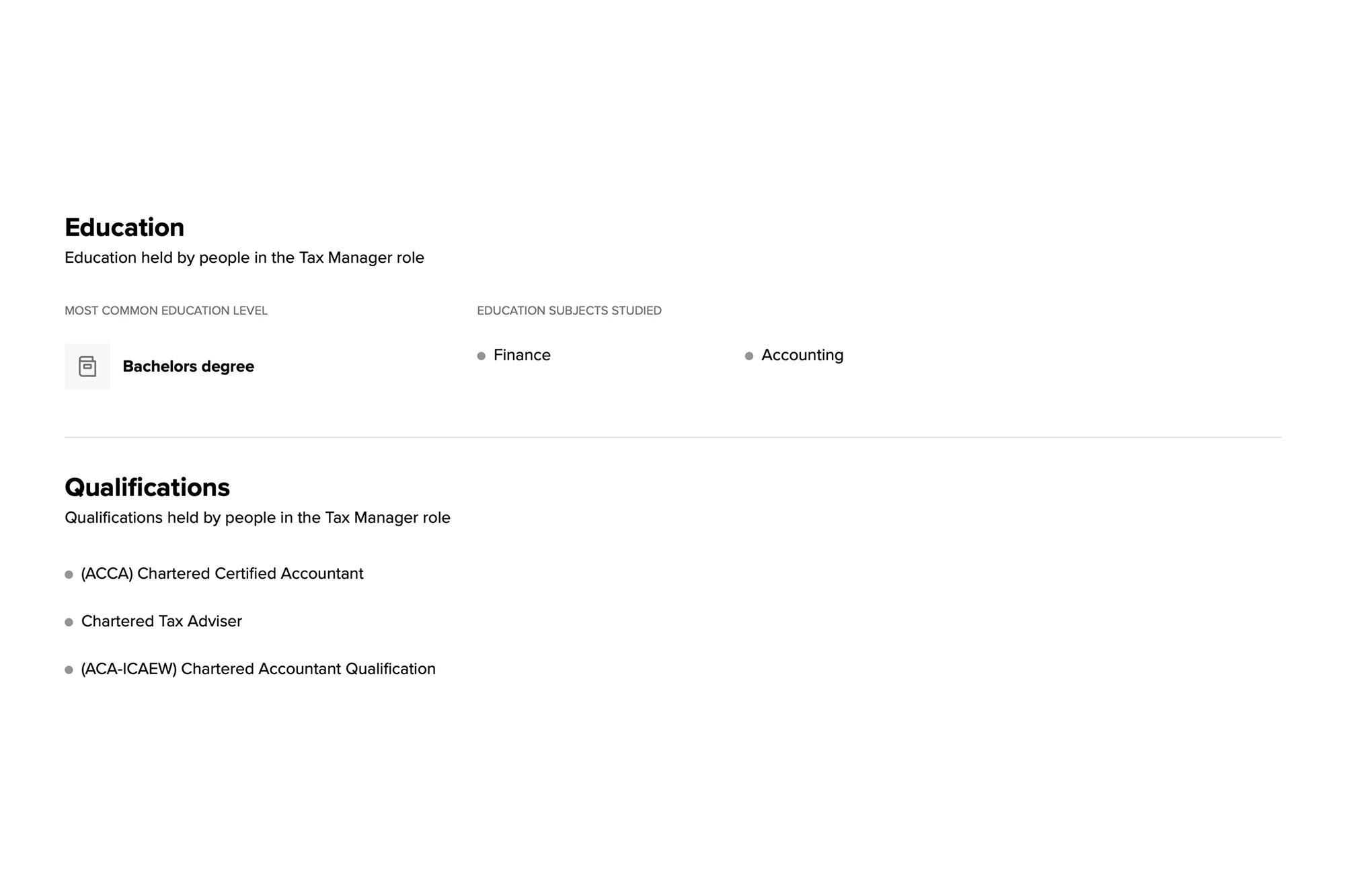 Education & qualifications
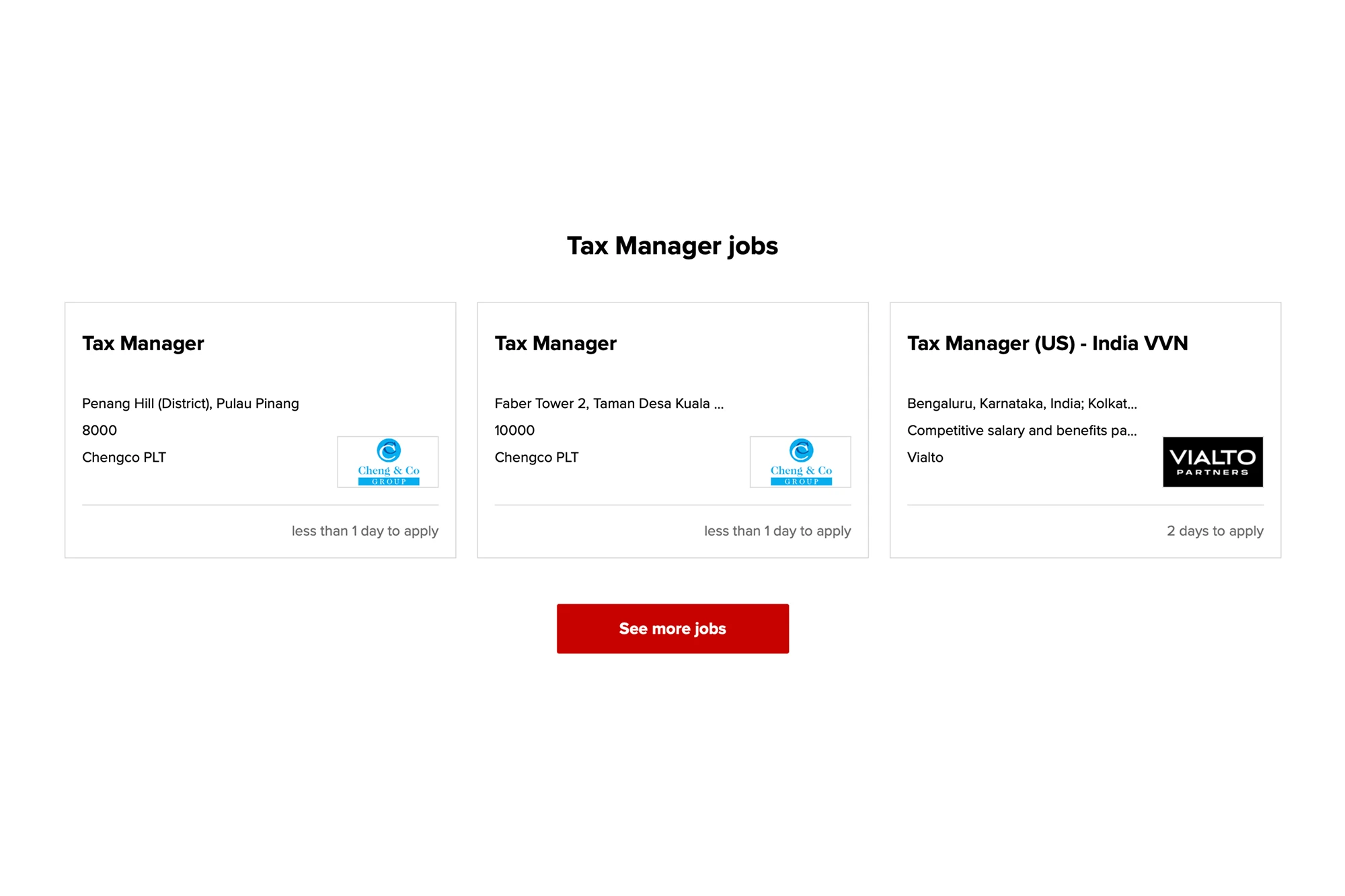 Related jobs
A commercial success
The most valuable feature for me is career paths, it is not something you see much of - it is extremely useful.
I really like the qualification suggestions, knowing what I need to reach the job I'm aiming for is so helpful
What I learned
Unfocused projects lead to scope creep.
Build what you can validate quickly, with minimal impact to the surrounding product. Get your result and use that as a springboard to negotiate the next steps.
MVP doesn't necessarily mean minimum quality.
Build fast, but only release what you would accept as a true representation of your product and brand. Impressions last and user trust is easily broken.
Adressing gaps in our data
The sheer number of different roles available means completing reliable role profiles for all roles available is extremely tricky. Standard common roles such as Teacher or Accountant have plenty of data — Postdoctoral Appointee for Nanoporous Materials does not. I’m working with the data science team to explore supplementary sources like O*NET to close this gap.
We also found that broadly generic roles, such as scientist or university professor, often return low-value insights because their skills depend more on industry than job title. We’re refining our taxonomy to separate general competencies from areas of speciality.